Knowing the difference between various procurement terms can significantly impact your daily operations, negotiations, and overall success in the field.
This blog aims to clarify some of the most commonly confused procurement terms. Understanding these distinctions will help streamline your processes, enhance communication with suppliers, and optimise your procurement strategy.
Core Procurement & Supply Concepts
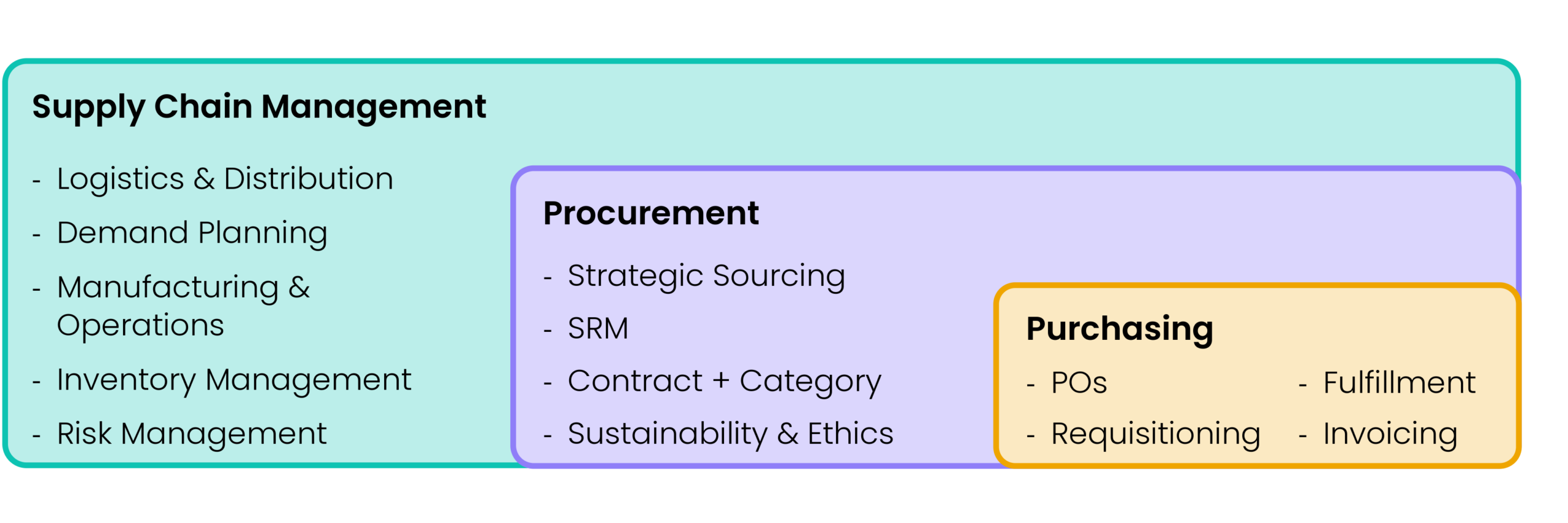
1. Purchasing
Purchasing refers to the specific act of buying the goods or services necessary for your organisation.
2. Procurement
Procurement refers to the acquisition of goods or services required by an
organisation for its operations.
3. Supply Chain Management
Supply chain management involves overseeing the entire process of getting goods or services to the end user. This includes inventory management, movement, and delivery of finished goods to the ultimate end user.
Digital & Modern Procurement
1. Traditional Procurement
Traditional procurement relies on manual or paper-based processes.
2. e-Procurement
E-procurement uses technology to automate the sourcing and contracting
procurement processes.
3. Procure-to-Pay (P2P)
P2P refers to the entire process of acquiring goods or services, from procurement to payment. Sometimes Procure-to-Pay is also called Source-to-Pay.
Foundational Procurement Terminology
1. Category Management
Category management manages spend for a specific category of goods or services.
2. Supplier Relationship Management
Supplier relationship management is a subset of category management that focuses on managing, collaborating with, and getting maximum value from your suppliers.
3. Supplier Management
Supplier management covers the administrative lifecycle of your supply base, including onboarding, performance, and risk.
4. Direct Procurement
Direct procurement purchases goods or services directly used in the production process.
5. Indirect Procurement
Indirect procurement purchases goods or services that support the production process.
6. Single Sourcing
Single sourcing relies on one supplier for a particular product or service.
7. Multiple Sourcing
Multiple sourcing uses multiple suppliers.
8. Commodity Procurement
Commodity procurement involves purchasing standardised goods or services.
9. Specialty Sourcing
Specialty procurement purchases goods or services requiring specialised knowledge or expertise.
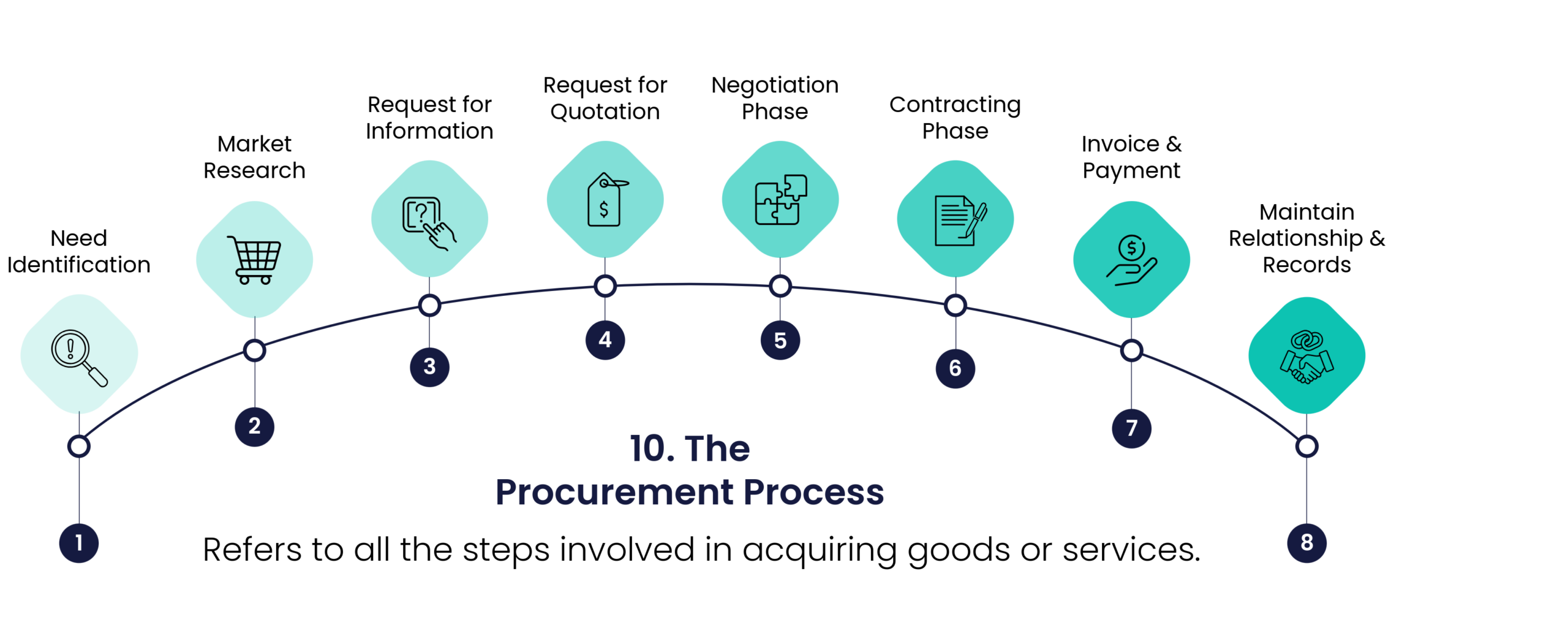
11. Procurement Policy
Procurement policy refers to the rules and guidelines that govern the procurement process.
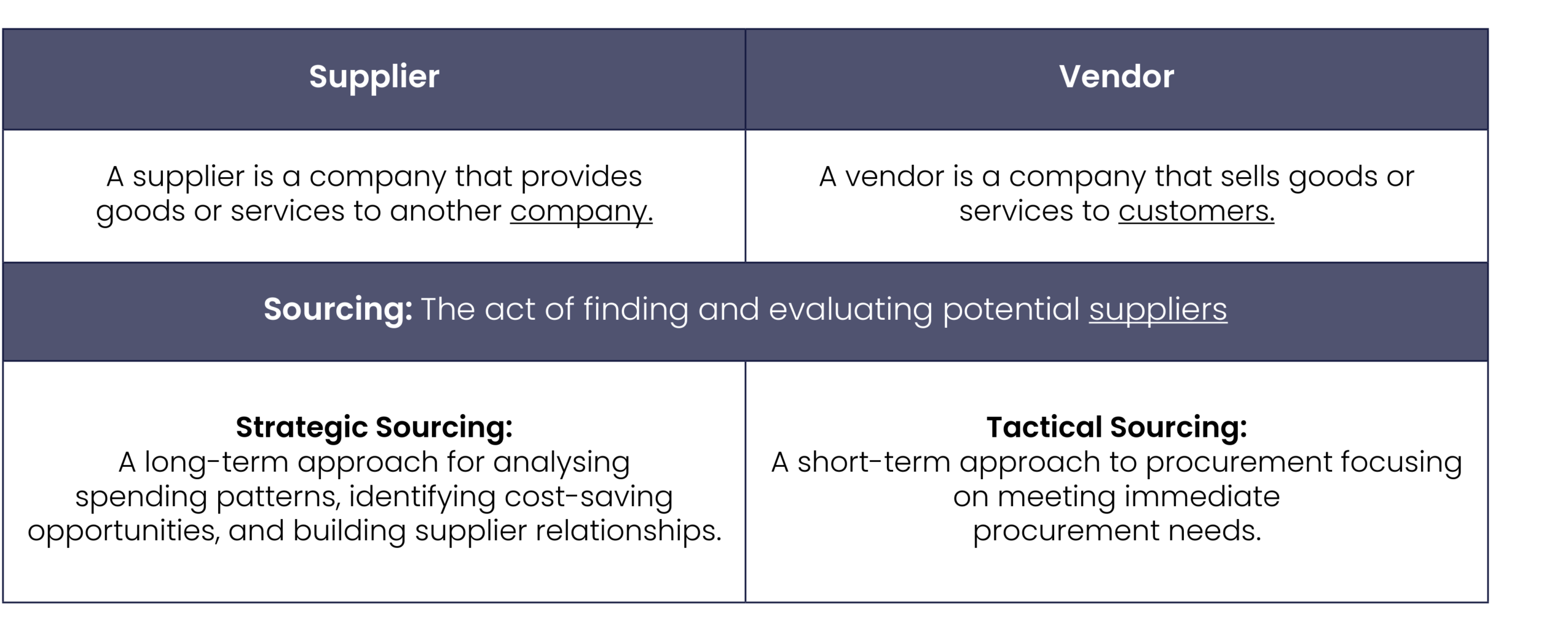
Suppliers, Vendors, & Sourcing Models
Basic Strategy, Risk, & Decision Making
1. Outsourcing
Outsourcing contracts of a business process or function to an external supplier.
2. Offshoring
Offshoring moves production or service delivery to a different country, often forming part of the outsourcing business model. Innovation is increasingly the key differentiator between this and outsourcing.
3. Make-or-Buy Decision
A make-or-buy decision determines whether to produce a product or service in-house or to outsource it to a supplier.
4. BATNA
BATNA is the Best Alternative To A Negotiated Agreement, referring to the best course of action a party can take if a negotiation fails. Think of this as a plan B, one that’s designed to give you added negotiation power and a bit of a safety net.
5. BAFO
BAFO is the Best And Final Offer in a negotiation, referring to the final offer made by a supplier or buyer in a negotiation. Essentially, it’s the bottom line proposal submitted with intent to close the deal. If you’re not satisfied with a supplier’s BAFO and end the negotiation, then you may need to revert to your BATNA.
Logistics, Inventory, & Operations
1. Logistics
Logistics manages the movement of goods and materials from the supplier to the customer. There are three types by flow: Inbound, outbound, and reverse.
2. Transportation
Transportation refers specifically to the physical movement of goods or materials.
3. Inventory
Inventory refers to raw materials, work in progress, and finished goods held by a company.
4. Stock
Stock refers specifically to the finished goods which are available for immediate sale.
5. Receiving
Receiving accepts goods or services delivered.
6. Inspection
Inspection verifies that the gods or services received meet the required specifications.
Contracts, Agreements, & Legal Structures
1. Contract
A contract is a legally binding agreement between two parties.
2. Agreement
An agreement can be a less formal commitment and may or may not be legally binding.
3. Contract Management
Contract management is about managing the terms and conditions of your supplier contracts.
4. Sales Order
A sales order confirms a customer’s order for goods and services.
5. Incentive Contract
This provides additional incentives to a supplier for achieving certain performance goals.
6. Cost Reimbursement Contract
A cost reimbursement contract reimburses a supplier for all costs incurred, plus a fee.
7. Statement of Work (SOW) / Scope of Work (SOW)
A statement of work defines the work to be performed by a supplier. A scope of work defines the boundaries of a project and the work to be performed by all parties.
8. Warranty
A warranty is a promise by a supplier to repair/replace a product that fails due to a defect.
9. Guarantee
Refers to a supplier promise to refund the purchase prise of a product if the customer is unsatisfied.
10. Letter of Intent (LOI)
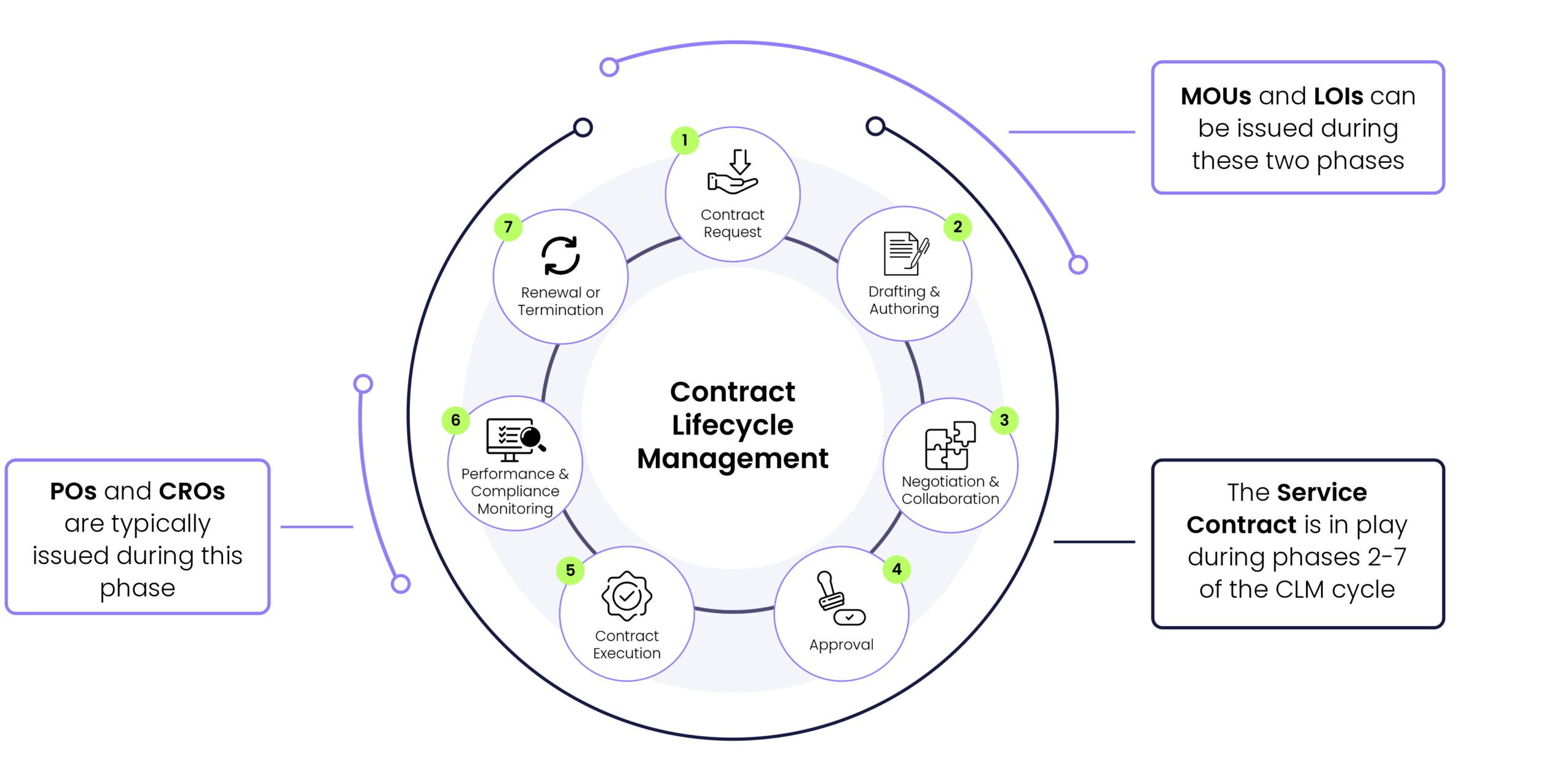
An LOI expresses an intent to do business with another party. An LOI is typically more detailed than an MOU, transaction focused, and may contain binding clauses.
11. Memorandum of Understanding (MOU)
An MOU is a non-binding agreement agreement between parties to cooperate on a specific project. It is often a generally broader document that establishes a cooperative framework or shared goals for the partnership with fewer binding elements. However; an MOU may still be of legal significance depending on drafting and jurisdiction.
12. Service Contractt
A service contract is a contract for the delivery of services detailing the scope of work, service levels, and any relevant legal protections. It is a type of contract.
13. Purchase Order (PO)
A purchase order is a document used to order goods or services from a supplier, initiated by the supplier. This is a short-term agreement for procuring goods for a specific project or activity.
14. Contract Release Order (CRO)
A CRO is a type of purchase order used for releasing a portion of the total goods or services referenced under an existing contract.
Ordering, Requests, & Bidding
1. Purchase Requisition (PR)
A PR is an internal document used by employees to formally request that their organisation purchases goods or services. It is utilised to get authorisation on a purchase.
2. Bid
A bid is a proposal from a supplier to provide goods or services. It will include key information such as price, timelines, approach to the service, and a value proposition. This is most commonly submitted in response to a tender, and if accepted can become a legally binding contract.
3. Tender
A tender is a formal invitation from a buyer for suppliers to submit bids for providing goods or services. This is most commonly used by public sector or large organisations to ensure transparency and best value. Tenders can be open or closed to specific suppliers.

The PDF version includes linked resources to help you learn how to write a tender.
4. Request for Information (RFI)
An RFI gathers information about and assesses capabilities of potential suppliers prior to initiating a tender.
The PDF version includes linked resources to help you learn how to write an RFI.
5. Request for Expression of Interest (RFEI)
An RFEI gauges the interest of potential suppliers in bidding on a project.
6. Request for Proposal (RFP)
An RFP solicits proposals from potential suppliers for a specific project.
The PDF version includes linked resources to help you learn how to write an RFP.
7. Request for Quotation (RFQ)
An RFQ invites suppliers to submit pricing and terms for specific, standardised, projects or services. This is best utilised for buyers who wish to focus on finding the best value, highest-volume, or lowest-cost provider.
8. RFX
An RFX is a general term that refers to requests for information, proposals, or quotes.
9. Bid Package
A bid package is a set of documents that suppliers use to prepare their bids.
Auctions & Pricing Models
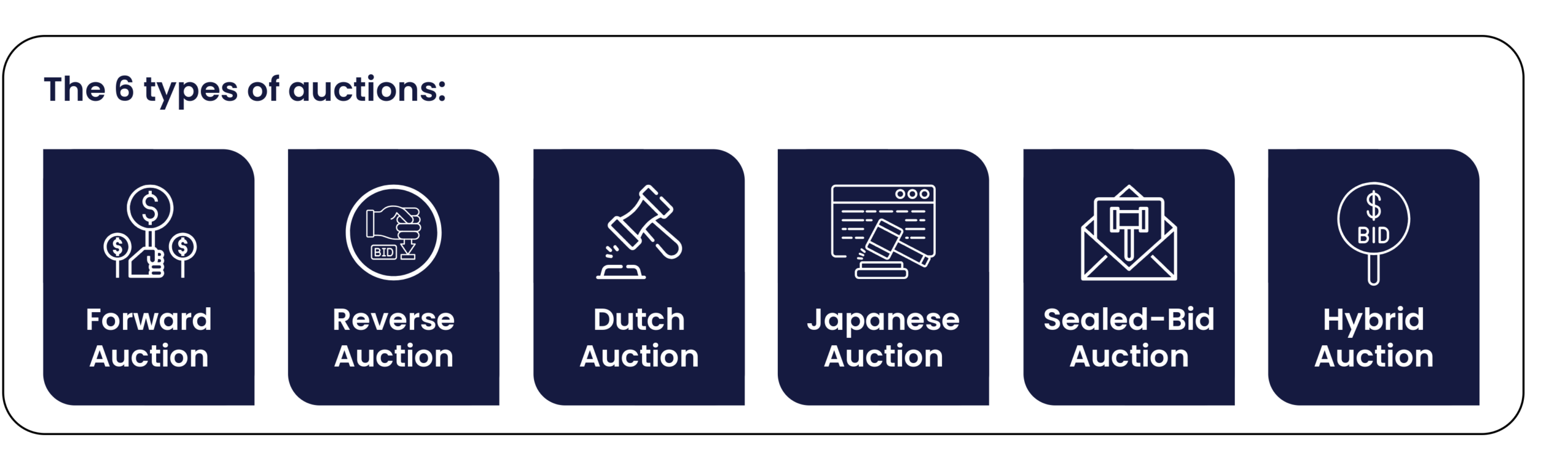
1. Forward Auction
A forward auction is one in which buyers bid on goods or services.
2. Reverse Auction
A reverse auction is one in which suppliers compete to offer the lowest price.
3. Cost-Plus Contract
A cost-plus contract pays the supplier for total costs incurred, plus a fixed- % markup.
4. Fixed-Price Contract
A fixed-price contract, sometimes known as a lump-sum contract, pays a set price for a specified scope of work, regardless of time or materials expended.
Payment, Invoicing, & Financial Terms
1. Payment Terms
Payment terms refer to the agreed-upon timeline for payment. Common terms include Net 30/60 (payment within 30/60 days), CID (cash in advance), and COD (cash on delivery).
2. Payment Conditions
This refers to the specific terms and conditions regarding payment, such as method and currency.
3. Payment Method
Payment method refers to the means by which payment will be made.
4. Invoicing
Invoicing is the process of sending a formal document, an invoice, requesting payment for goods or services rendered, typically with future payment terms.
5. Payment
Payment is the actual transfer of money to settle the invoice or bill.
6. Blanket Purchase Order (BPO)
A BPO is an agreement between a buyer and a supplier to purchase goods or services at predetermined prices over a set period.
7. Standing Order (SO)
An SO is an agreement to purchase a fixed quantity of goods or services at specified intervals. You can think of this as an automated, recurring purchase order.
8. Incoterms
Incoterms are standardised trade terms used in international trade to define the responsibilities of buyers and sellers regarding the delivery of goods.
Pricing, Costs, & Spend
3. Total Cost of Ownership (TCO)
TCO is the total cost associated with owning and operating a product of service over its entire lifecycle.
4. Total Cost of Acquisition (TCA)
TCA is the total immediate cost associated with acquiring a product or service.
5. Cost Analysis
Cost analysis examines the cost of the individual components required for producing or providing a product or service. This is used to determine if the vendor’s proposed quote is realistic, reasonable, and justifiable in cases of solo bids or unique items.
6. Price Analysis
Price analysis compares the prices of different suppliers for the same product or service.
Quality, Performance, & Compliance
1. Quality Assurance
Quality assurance involves preventing defects from occurring.
2. Quality Control
Quality control involves identifying and correcting defects.
3. Compliance
Compliance involves adhering to legal or regulatory requirements.
4. Conformance
Conformance refers to meeting specified standards or requirements.
5. Supplier Performance Management
Supplier performance management focuses on evaluating and improving metrics such as delivery, cost, and service levels.
6. Supplier Quality Management
Supplier quality management focuses on metrics such as product conformance, quality, and defect rates.
7. Service Level Agreement (SLA)
An SLA outlines expected service levels between a supplier and customer.
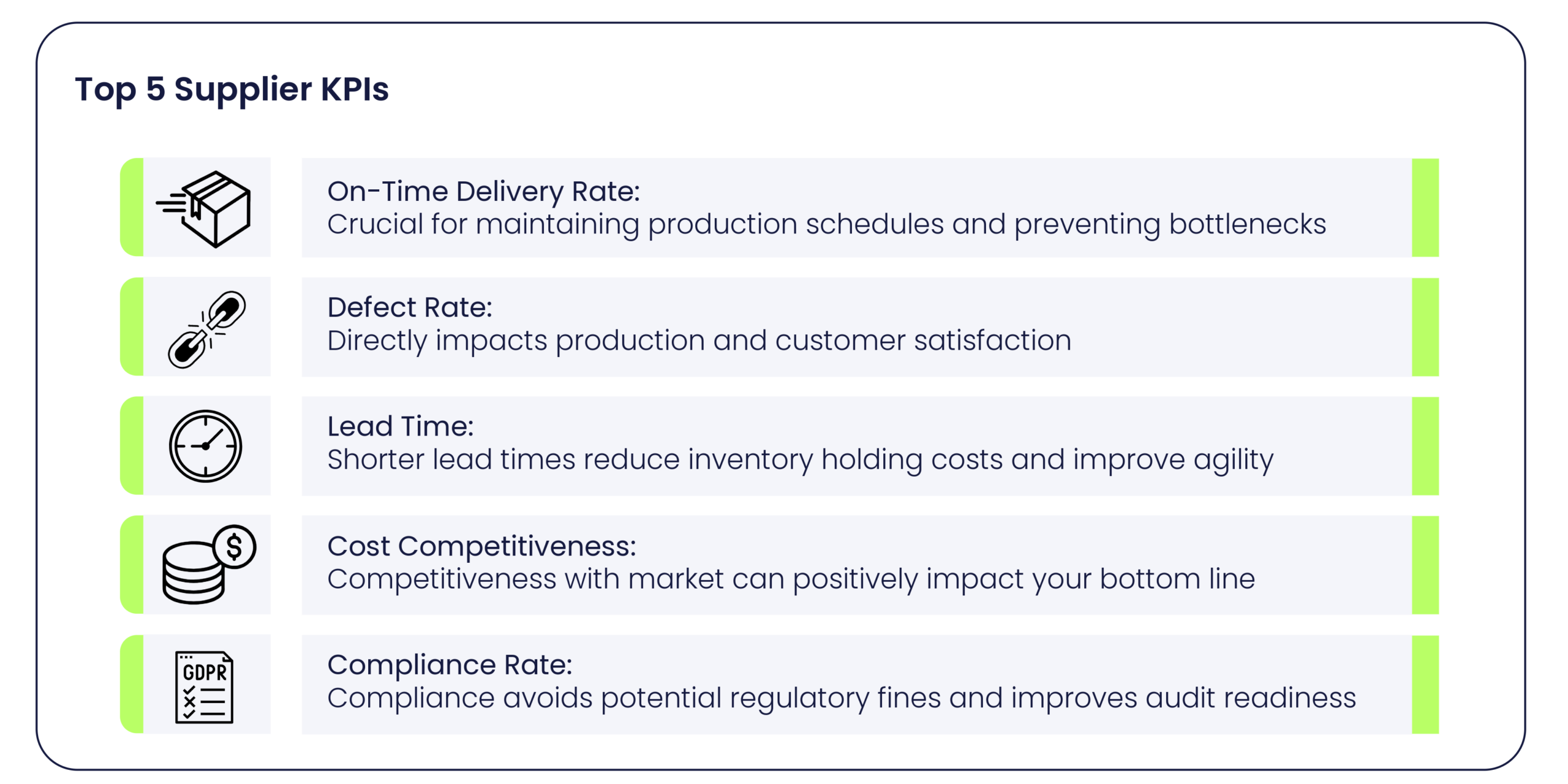
8. Key Performance Indicator (KPI)
A KPI is a measurable indicator of a supplier’s or process’s performance.
Production & Planning
1. Bill of Materials (BOM)
A BOM lists the raw materials, components, and quantities required to produce a product. This is typically used in manufacturing.
2. Bill of Quantities (BOQ)
A BOQ lists the materials, labour, and other costs required for a construction project.
3. Material Requirements Planning (MRP)
MRP uses forecasting and inventory data to plan production and purchasing.
4. Just-in-Time (JIT)
JIT focuses on minimising inventory levels by receiving goods just in time for production.
5. Value Analysis
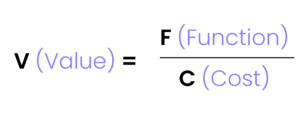
Value analysis analyses the value of a product or service to ensure the cost is no greater than is necessary to carry out its functions. Essentially it is a search for cost-saving opportunities, while being mindful of the product’s quality and intended purpose.
Value is calculated using a simple equation.
7. Value Engineering
Value engineering redesigns a product or service to improve its value, according to the value analysis. It’s a stringent process for end-to-end product analysis and adaptation, driving increased value for customers.
8. Work Breakdown Structure (WBS)
A work breakdown structure is a hierarchical decomposition of a project into smaller tasks.
Final Thoughts
Understanding these distinctions helps procurement professionals make better decisions, communicate more clearly with stakeholders, and design stronger, more efficient procurement strategies.